
AC Not Working in House? 3 Causes & Real Fix Costs
When your ac not working in house and every vent is blowing room-temp air, the diagnosis narrows to three parts: the compressor, the refrigerant circuit, or the power feed. In the East Bay, those repairs run from about $150 to $2,500. Here’s how to figure out which one you’ve got before a tech walks in.
“No cold anywhere” means the failure is upstream
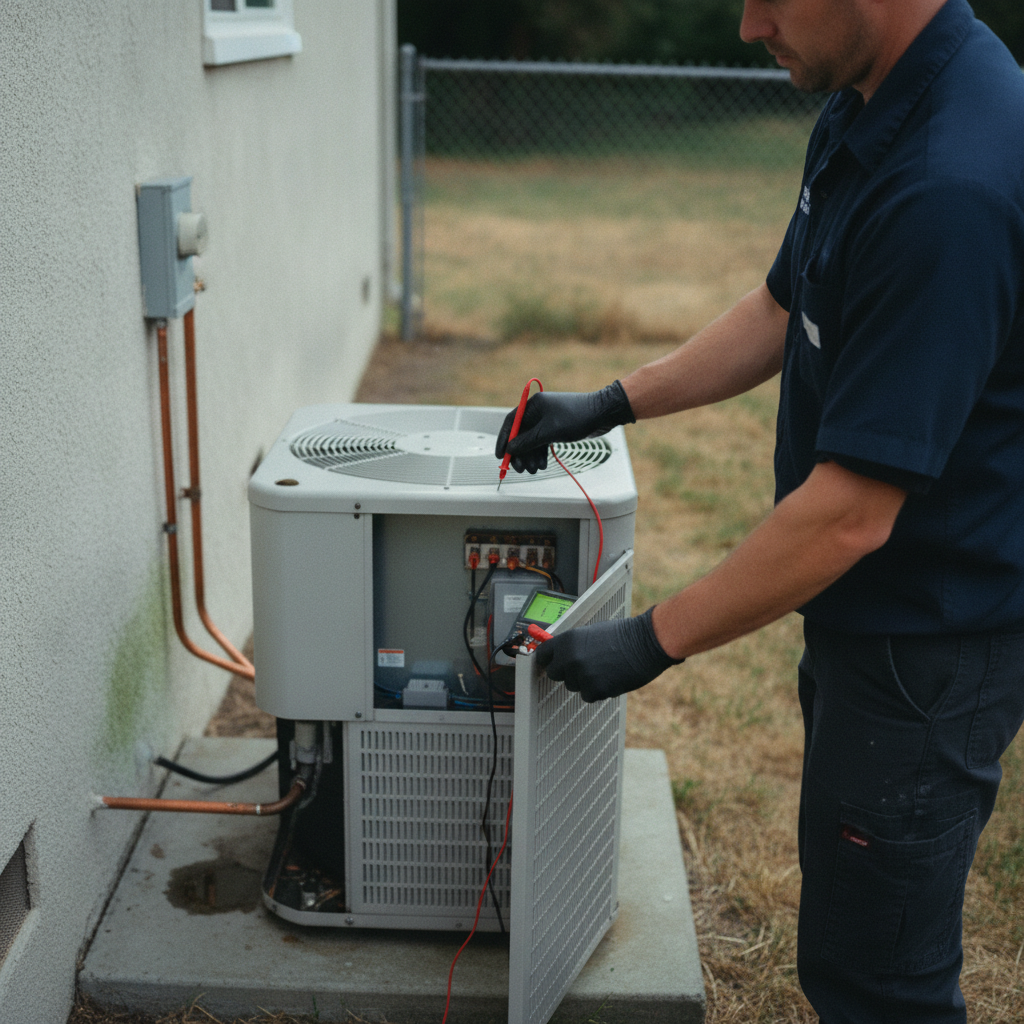
If not one vent in the house puts out cold air, you’re not looking at a duct problem or a thermostat sensor. The breakdown happens before air hits the supply duct. That puts the fault in the outdoor condenser unit or the electrical feed to it.
Three components account for nearly every whole-house cooling loss I’ve seen in 20 years of pulling these units in Alameda and Contra Costa:
- The compressor: a cylindrical component in the condenser, roughly the size of a five-gallon bucket. It pressurizes the refrigerant gas. When it dies, the cycle stops.
- The refrigerant circuit: sealed copper lines and coils carrying the coolant between indoor and outdoor. A leak drops pressure and kills cooling.
- The power delivery: the disconnect box on the wall, the start capacitor on the unit, or the breaker on your panel.
Quick triage from your driveway: fan spinning but no compressor hum? Refrigerant or compressor. Fan not spinning at all? Power. Compressor humming but the two copper lines feel the same temp as a warm pipe? Refrigerant’s low.
What does each fix cost in the East Bay?
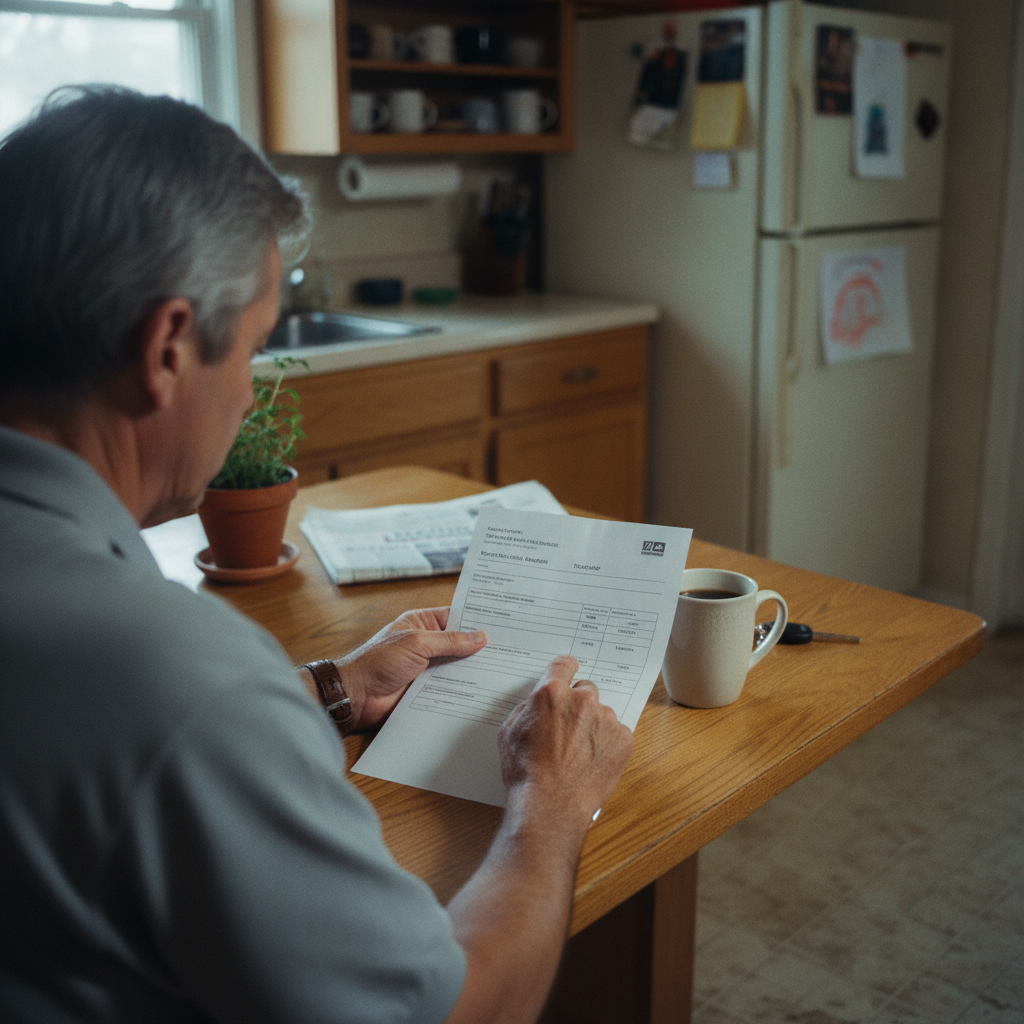
A standard residential compressor replacement runs $1,200 to $2,500 parts and labor for a 3-ton unit, which is what most East Bay homes run. If your system is still on R-22, the compressor itself costs more because that refrigerant is scarce. According to EPA regulatory data referenced in HVAC industry guides, R-22 now runs $50 to $100 or more per pound. A full recharge on an older system adds another $400 to $800.
Refrigerant leak repair: finding the leak is $150 to $350 with an electronic detector or dye test. A small solder repair on a fitting: $200 to $500. A coil replacement: $1,000 to $2,200. As of 2026, new systems use R-32 or R-454B per the EPA’s January 2025 manufacturing cutoff on higher-GWP refrigerants. Those cost less per pound than R-22, but the equipment is newer, so parts pricing is different.
Power issues are the cheap bucket. A dead start capacitor: $80 to $150 parts, $100 to $200 labor. A tripped disconnect: $100 to $250. A corroded panel connection: $150 to $400. These are the fixes you want to rule out first because they cost less than a phone call to a specialist.
Get a diagnostic that doesn’t come with a $4,000 upsell
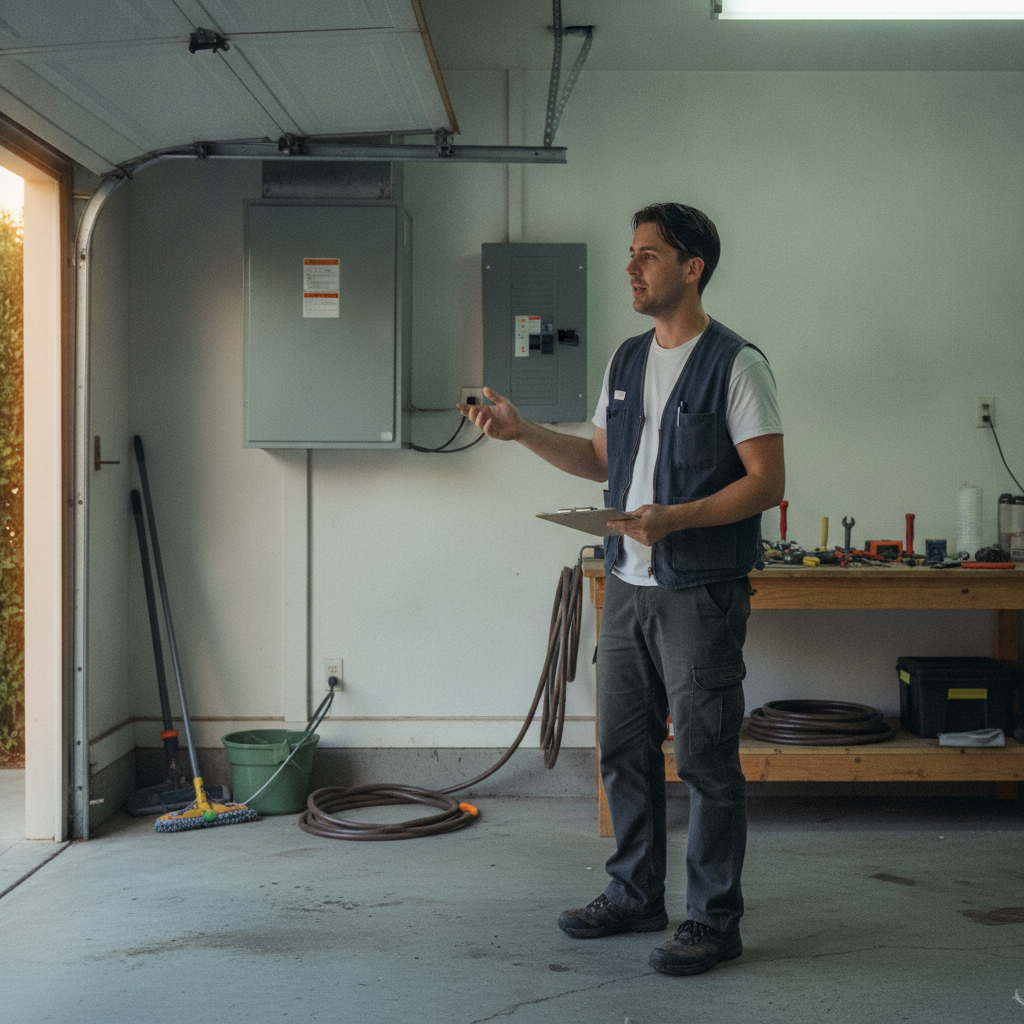
You don’t need a $150 “tune-up” to find out why your AC isn’t cooling. You need someone to open the disconnect, check the capacitor, listen to the compressor, and read the pressure gauges. That’s a 20-minute diagnostic.
What to ask for before you book:
- A flat diagnostic fee ($89 to $149 in the East Bay) that comes off the repair bill if you proceed.
- A written estimate with line items before any work starts: parts, labor, refrigerant by the pound.
- A tech who can read the refrigerant type off your unit’s nameplate without pulling a spec sheet.
Red flags that mean you’re getting pitched:
- “Replace the whole system” after 15 minutes and no pressure readings.
- A single lump-sum quote with no breakdown.
- “Efficiency upgrades” mentioned before you’ve asked about the problem.
You’re allowed to say “I just want to know what’s broken and what it costs to fix that.” A straight tradesperson will respect that.
A 10-minute check before you call anyone
- Flip the AC breaker off and on. Wait 30 seconds. Listen for the outdoor unit to kick.
- Check the disconnect box on the wall. The toggle should be “on.” It trips during power surges.
- Look at the outdoor unit. Fan spinning? Compressor humming? Leaves packed around the coil?
If your ac not working in house and the fan’s still running, the problem is likely refrigerant. That’s the one that costs the most to diagnose properly because a tech needs gauges on the lines to read superheat and subcooling. You can’t do that part yourself, and that’s fine. But ruling out the breaker, the disconnect, and a clogged coil first saves you a $120 diagnostic fee for something you could’ve spotted in two minutes.
At Spot Free HVAC, we run the same triage sequence every time a homeowner calls in with no cold air. Compressor, refrigerant, power. We check them in that order because it goes from most expensive to cheapest, and we’d rather not quote a $2,000 compressor swap when the capacitor was $40. That’s the whole job: get you the right answer, not the biggest invoice.
Learn more about how Spot Free HVAC can help you.


