
AC Not Working? Check These 7 Signs Before You Panic
You noticed the air feels off, or the unit is making a sound it didn’t make last week, and now your phone is full of search results for air conditioner not working. Breathe. Most of the time, your system is doing something normal. But seven specific signs mean it’s genuinely failing. Here’s how to tell the difference before you hand over $200 for a diagnostic you didn’t need.
The 7 Signs Your AC Is Actually Failing
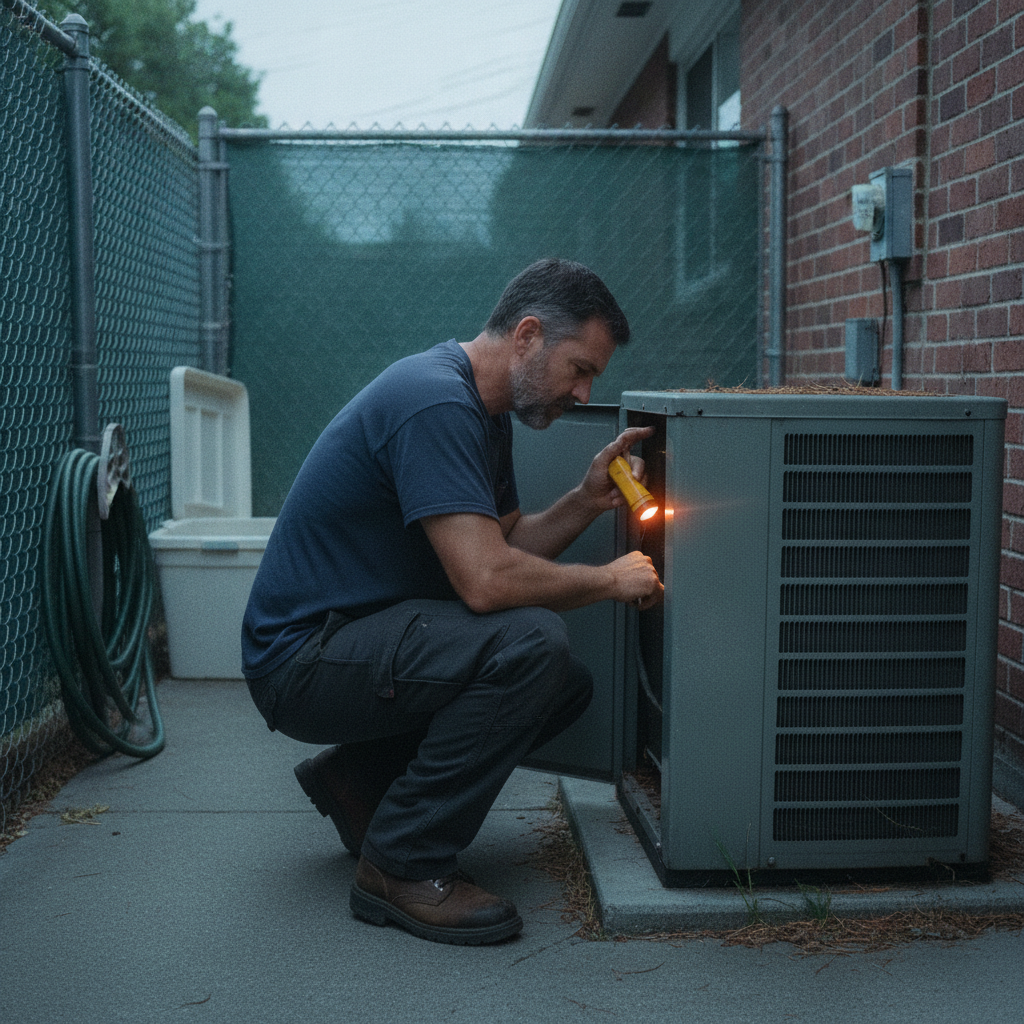
I’ve been on the other side of that phone call for about twenty years, and the pattern is the same: people panic over a warm vent on a Tuesday, then ignore a grinding noise for three months. The list below separates “call a pro this week” from “check back in a few days.”
- Weak airflow. You feel air at the register, but it’s a whisper, not a push. If the filter is clean and it’s been going for more than a day, the blower motor or a duct issue is in play.
- Sustained warm air. Not the first five minutes after startup (that’s normal). If the air is still warm after 15 minutes of running, the refrigerant charge or the compressor is the problem.
- Short cycling. The unit kicks on, runs four or five minutes, shuts off, kicks on again. That’s the compressor fighting a restriction or a failed capacitor.
- Ice on the evaporator coil or supply lines. You’ll see a frosty patch behind the return grille. Turn the system off. Running it with ice on the coil will crack the coil or kill the compressor.
- Musty or moldy smell from the vents. Biological growth in the drain pan or coil. Not dangerous in the first week, but it’s not clearing itself.
- A new grinding, screeching, or banging noise. Not a rattle when you first hit the switch. A sustained mechanical sound means a bearing, a fan blade, or a motor is going.
- Electric bill jumped 15 to 20 percent with the same thermostat settings and same number of people in the house. The system is working harder to do the same job.
A grinding noise outside means a bearing is going. Ignore it a month and $400 becomes $2,000.
Is Your AC Actually Broken or Just Doing Normal Stuff?

Three behaviors scare people into calling a technician, and none of them are failures.
- Fan-only cycles. Your air conditioner runs the indoor fan without the compressor for a few minutes at the end of a cooling cycle. That’s the system flushing residual cold air through the ducts. The compressor isn’t dead.
- Warm air at first startup. When the unit kicks on after sitting idle, the first three to five minutes of air can feel lukewarm. The coil needs time to pull heat off the passing air. Still warm after ten minutes? That’s a different story.
- Condensation. A small drip from the drain line, or a wet patch on the outdoor unit, is normal. According to industry references on condensate properties, the liquid forms when heat is removed from vapor by contact with a cold surface. The same references note that condensate is the standard term for any liquid phase generated from vapor condensation. Your evaporator coil is that cold surface. A few drops a day is physics, not a leak. A puddle under the unit, or water coming from the indoor cabinet, is.
A small drip from the condensate drain line is normal condensation physics, not a sign of a broken AC.
What to Do Once You’ve Picked a Real Problem

Match the urgency to the sign. Here’s the short version:
- Musty smell: Run the system on fan-only for an hour to dry the coil, swap the filter. If the smell comes back in a week, call someone.
- New grinding noise: Turn the system off at the breaker. Call before the next cooling cycle.
- Ice on the coil: Shut it off. Let it thaw (four to six hours). If it freezes up again within a day, that’s a refrigerant or airflow problem that needs a pro.
- Short cycling or weak airflow: Buy a $15 to $25 filter, clear debris off the outdoor unit. If your AC is still not working the way it should after that, the diagnostic call is justified.
Cost Anchors: What a Fair Repair Actually Runs
I’ll level with you on numbers because the first thing a homeowner needs is whether the quote in front of them is in the right neighborhood.
- Clogged or dirty condensate drain line: $150 to $300 for a flush or snaking.
- Failed start capacitor: $150 to $300 parts and labor.
- Blower motor bearing or replacement: $400 to $900.
- Compressor replacement: $1,500 to $4,500 depending on tonnage and warranty.
- Full system replacement, 1.5 to 3 ton at East Bay labor rates: $6,000 to $12,000 installed.
A fair diagnostic in the East Bay runs $89 to $149, and a reputable shop credits that fee toward the repair if you proceed. If someone quotes $400 just to “take a look,” walk.
If your air conditioning problem traces back to a $200 capacitor, you should not be paying $800 for the visit. That’s the whole point of knowing what’s normal and what isn’t. Spot Free HVAC does the first kind of call: tell you what’s actually wrong, what it costs, and whether you can wait. No upsell, no pressure. Just the answer.
Learn more about how Spot Free HVAC can help you.


