
AC Running But Not Cold? Stop Guessing, Start Testing
Your air conditioner not blowing cold air but running is almost never a mystery. In the East Bay, the two culprits are a dead run capacitor (around $100 in parts) and a slow refrigerant leak. The compressor is usually fine until it’s not, and by then the bill jumps to $3,000. The difference comes down to whether someone tested the cause or guessed.
The $100 Part That Masquerades as a $3,000 Problem
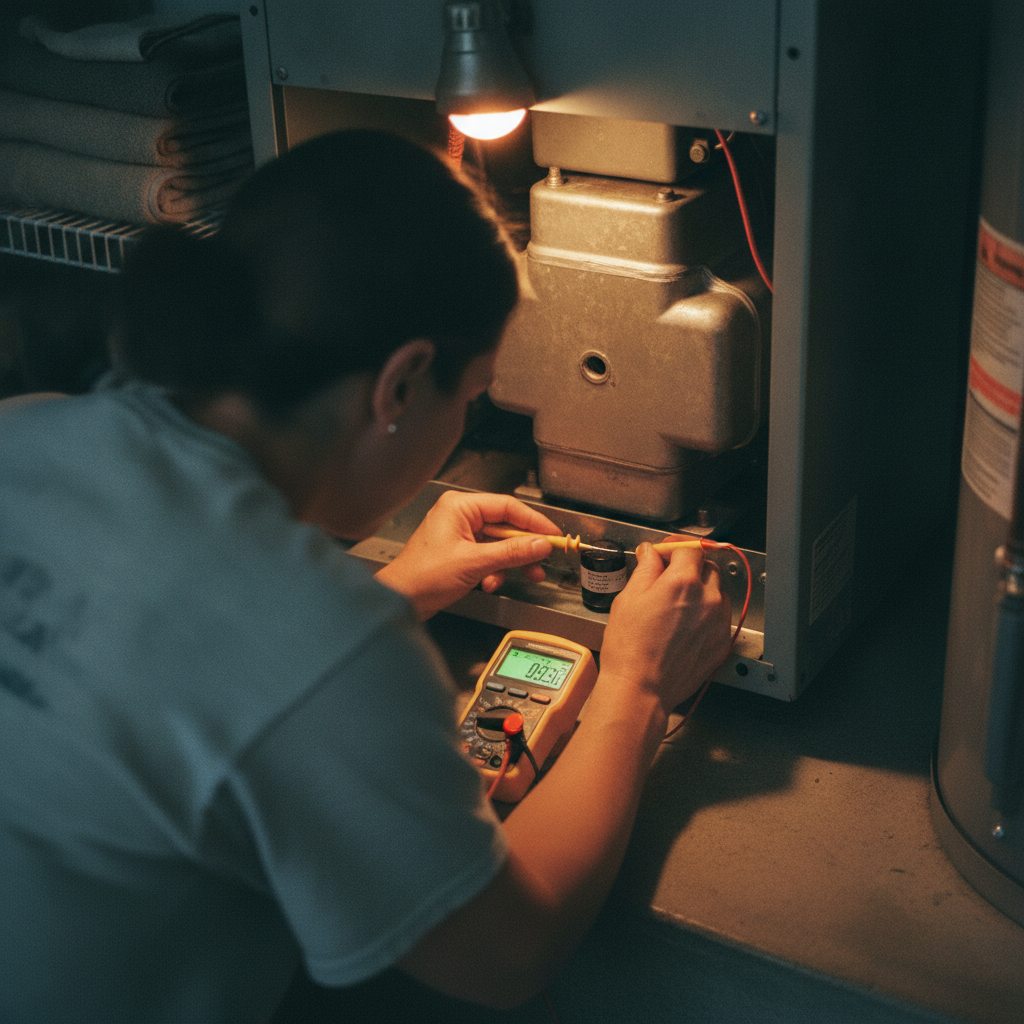
A bad run capacitor is the single most common cause of an air conditioner not blowing cold air but running at full speed. The capacitor kicks the compressor motor off its starting position. When it dies, the motor hums, the outdoor fan might still spin, but the compressor never actually cranks. To a homeowner, that sounds like a dead compressor. To a tech with a multimeter, it’s a ten-second check.
The test looks like this:
- Tech kills power to the outdoor unit and removes the condenser access panel
- Reads capacitance on the run capacitor (the spec is printed on the cap itself, typically 44 to 53 microfarads for a 1 to 3 ton unit)
- Compares the reading to spec. Below tolerance means it’s dead
- Replaces the cap, restores power, listens for the compressor to kick
That whole sequence takes five minutes. If a tech quotes you a compressor replacement without pulling that panel and reading that cap, walk away. A $100 capacitor swap and a $3,000 compressor replacement produce the exact same symptom at the thermostat: unit humming, no cold air. The only way to tell them apart is the test.
Why Does a Slow Refrigerant Leak Make Your AC Run But Not Blow Cold Air?
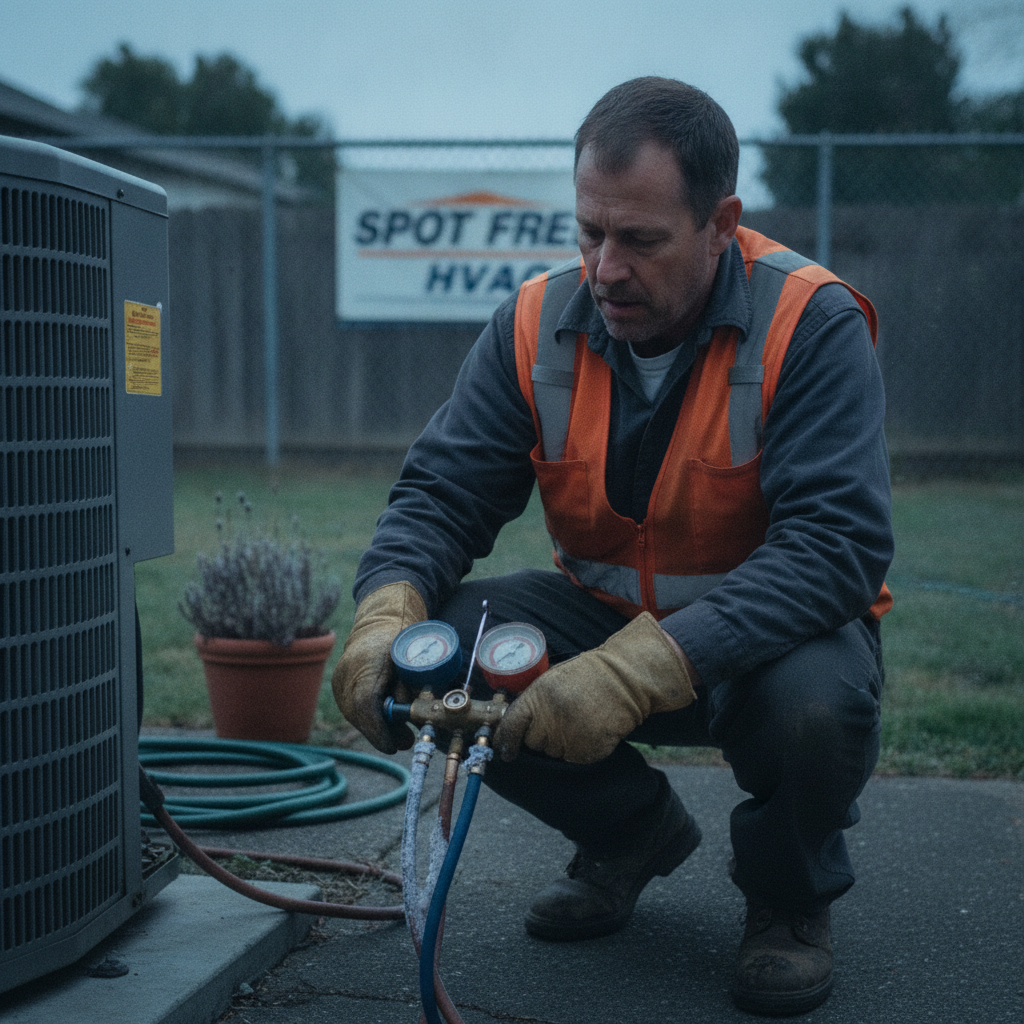
A pinhole in the suction line or a weeping flare connection loses enough refrigerant over two or three months to drop the system’s charge well below spec. The compressor still runs. The fan still turns. But the evaporator coil can’t pull enough heat out of your living room because there isn’t enough refrigerant flowing through it. You get warm air, maybe lukewarm, and the unit short-cycles like it’s confused.
The timeline matters. According to EPA regulatory tables, the January 2025 manufacturing cutoff on equipment above 700 GWP left R-32 and R-454B as the current standard refrigerants. Older R-410A and R-22 systems are still legal to service, but R-22 now runs $50 to $100+ per pound on the open market. If your unit is on R-22 with a slow leak, the refill cost climbs every quarter. And the compressor runs harder, hotter, to compensate for the missing charge. That heat stress degrades the windings over time. That’s how a $300 leak repair becomes a $3,000 compressor job.
A legitimate leak diagnosis should include:
- Electronic leak detector swept across every fitting, the coil, and the compressor body
- UV dye added if the detector flags a suspect area
- High-side and low-side pressure readings over a 15-minute window to confirm the charge is actually dropping
- A written note naming the specific leaking component and the repair cost for that part
If the quote jumps straight to “you need a new system” without showing you where the leak is, you don’t have a diagnosis. You have a sales pitch.
What a Legitimate Diagnosis Actually Looks Like
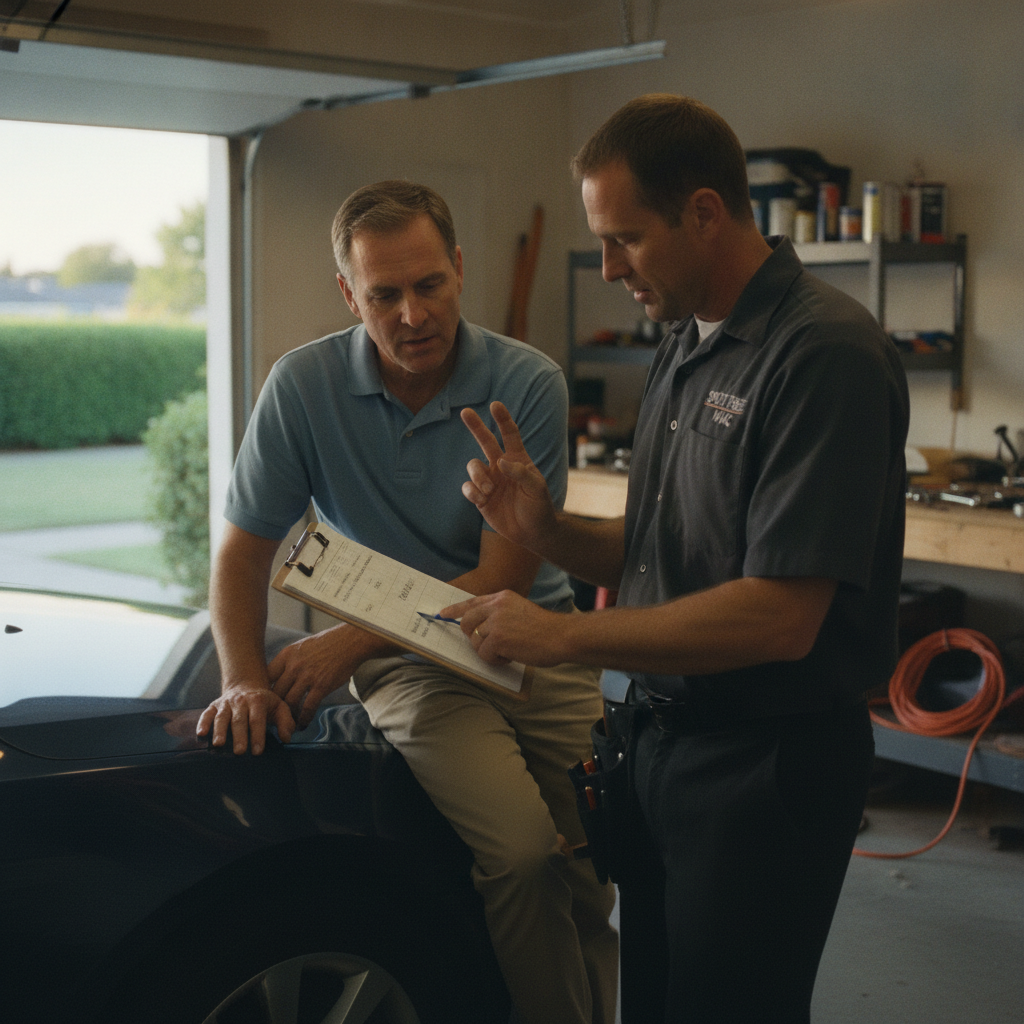
You don’t need to be an HVAC tech to tell whether someone found your real problem or just found the most expensive part to replace. For the symptom of an air conditioner not blowing cold air but running, a proper diagnostic visit should cover these items before any quote gets handed over:
- Capacitance reading on the run capacitor, with the spec number from the label
- Compressor amp draw compared to the nameplate rating (a healthy compressor pulls near rated amps; a struggling one pulls well under)
- Suction and discharge pressure readings with the system running for at least 10 minutes
- Visual check of the evaporator coil for frost or ice, which points to airflow or refrigerant issues rather than compressor failure
- A clear breakdown: part cost, labor cost, total, before you agree to anything
Ask the tech to walk you through each reading. “Can you show me where the cap reads 38 microfarads when it should be 44?” is a fair question. A straight answer means they found the problem. Vague hand-waving means they didn’t.
How Long Before a Refrigerant Leak Cooks Your Compressor?
There’s no fixed clock. It depends on how low the charge drops and how hard the compressor works to make up for it. A system running at 70% of its designed charge will overheat the compressor windings on a 95-degree July afternoon in Oakland. The insulation degrades with every hot cycle. Eventually a winding shorts and the compressor seizes. At that point the repair runs $3,000 installed, and you might need a new condenser section on top.
The fix for the leak itself is usually a few hundred dollars. A flare nut, a small brazed repair on the suction line, a replaced O-ring on the service port. The compressor damage is the expensive part, and it’s preventable if you catch the leak in month two instead of month five.
If your air conditioner is not blowing cold air but the fan is still spinning, call a tech and ask two specific things: “Did you read the capacitor?” and “Did you pull pressure on both sides?” Thirty seconds of questions. They’ll tell you whether you’re getting a diagnosis or a guess. And in the East Bay, where every July afternoon feels like a sauna in a garage, you don’t have the luxury of guessing.
Learn more about how Spot Free HVAC can help you.


