
AC Unit Not Working? Try This 5-Minute Reset First
Your AC unit not working doesn’t mean you need a $400 repair. Most of the time, a dead system in July is a tripped breaker, a dead thermostat battery, or the outdoor power switch in the wrong position. Give yourself five minutes to run through the basics before you pick up the phone. If it’s still dead after that, you’ll know what you’re looking at and what it should cost.
The 5-Minute Reset Routine
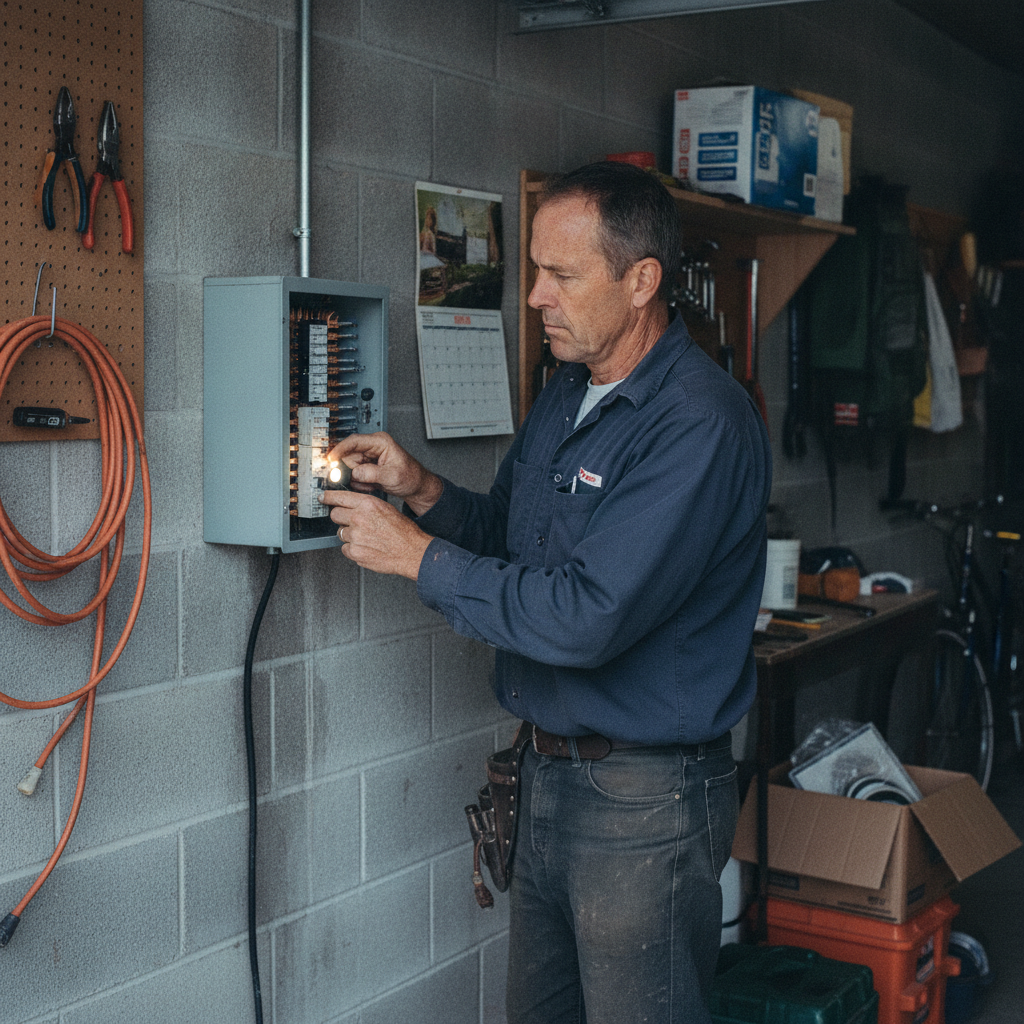
Do these in order, top to bottom. Stop if the AC kicks on at any step.
- Flip the breaker. Go to your panel. The AC circuit is usually labeled “A/C” on a 20-amp breaker. If it’s tripped (stuck in the middle or fully off), flip it all the way off, wait 30 seconds, flip it back on. If it trips again, stop. Do not keep resetting it.
- Swap the thermostat batteries. Dead AA or AAA cells are the most common “my AC unit not working” cause I see in the East Bay. Blank display? That was it.
- Walk outside and look at the unit. Is the disconnect switch (small red or black toggle on the box) in the ON position? Are the fins clear of leaves and pine needles? Any hum, any click, any sound at all?
- Press the reset on the GFCI outlet. Some outdoor units plug into a GFCI-protected outlet near the pad. Hit the reset button.
- Give it two minutes. The system has a built-in delay after a power interruption. 120 seconds. Then check again.
If the AC starts at any of those steps, you’re done. Total cost: zero.
What a Dead AC Actually Points To
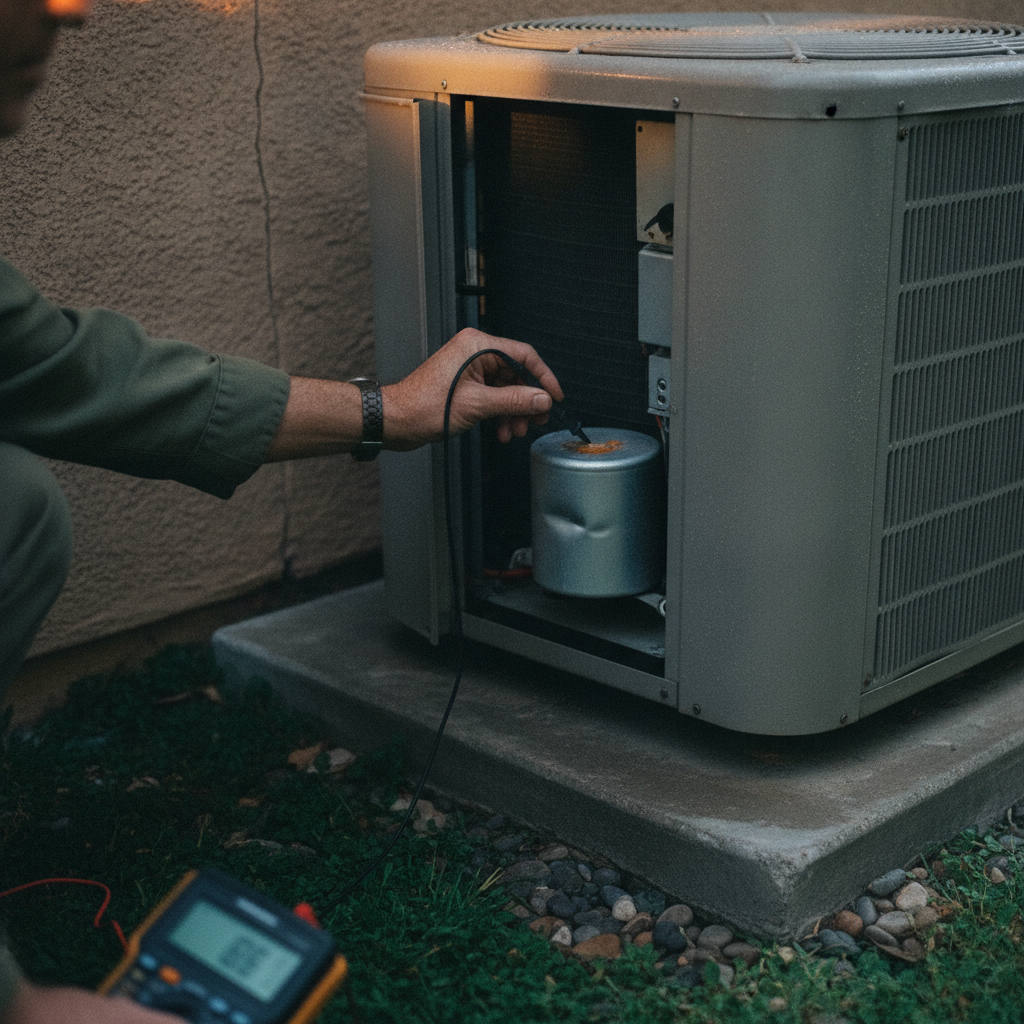
If the outdoor unit is completely silent after the full routine, the problem is inside the cabinet. Three components cause most “AC won’t start” calls in Oakland and Berkeley:
- Run capacitor (the round cylinder on the side of the unit). Fails after 8 to 10 years. Part: $20 to $60. Labor: $100 to $200.
- Contactor (the small relay that clicks when the thermostat calls for cooling). Burns out from repeated cycling. Part: $15 to $40. Labor: $100 to $150.
- Control board (the green PCB inside the panel). Usually after a power surge. Part: $150 to $400. Labor: $150 to $300.
OSHA’s safety guidance is direct on why you should not open that panel yourself: personal protective equipment minimizes exposure to hazards that cause serious workplace injuries and illnesses. A capacitor holds a charge even after you cut the power. That’s not a “maybe it’ll be fine” situation.
How Much Should a Diagnostic Fee Cost?

A fair diagnostic fee in the East Bay runs $89 to $149, and it gets credited toward the repair if you go ahead with it. That’s the norm. If a company quotes $250 just to “take a look,” walk. You’re paying for the drive and 30 minutes of a technician’s time, not a mystery novel.
The fee should cover the trip, 15 to 20 minutes of testing (multimeter on the capacitor, voltage at the contactor, reading the board’s error code), and a written quote with part and labor broken out separately.
What to Ask Before You Sign Anything
When the tech points at a bulged capacitor and gives you a number, ask these before you say yes:
- “Is the $89 diagnostic credited if I approve the repair today?” It should be. If they say no, that’s a yellow flag.
- “What’s the part cost and the labor cost separately?” You want to see the capacitor at $35 and the labor at $150, not a blended “$185 capacitor replacement.”
- “Do you stock the part, or is this a 3-day wait?” A good local tech pulls a capacitor off a truck or a supply house the same day. Breakers Unlimited, a wholesale electrical supplier, carries over 30,000 SKUs including circuit breakers, fuses, and motor control components. Parts are available.
- “What’s the warranty on the part and the workmanship?” Standard is 1 year each. Some shops do 2 years on parts.
If the number lands in the ranges above and they answer straight, you’re paying fair. If they hedge, bundle, or pressure you to “just do it today or the price goes up,” hang up. There are other shops in the East Bay who’ll show up Thursday.
Your AC unit not working is stressful, especially at 95 degrees with a kid home. But the five-minute routine catches about half of calls, and the rest are a $150-to-$300 fix, not a $2,000 replacement. You don’t owe anyone a same-day answer. Take the quote, sleep on it, call back tomorrow if the number still feels right.
Learn more about how Spot Free HVAC can help you.


