
Carrier AC Not Cooling? East Bay Repair Costs & Fixes
Your carrier ac not cooling problem is almost always one of three small parts, and the fix costs a fraction of what a replacement quote will try to scare you into. In San Leandro, Hayward, and Castro Valley, a Carrier unit that quit cooling mid-July is rarely a dead unit. It’s a $150-to-$400 repair. Here’s what that looks like, part by part, and who to actually call.
The Three Parts That Kill a Carrier Unit
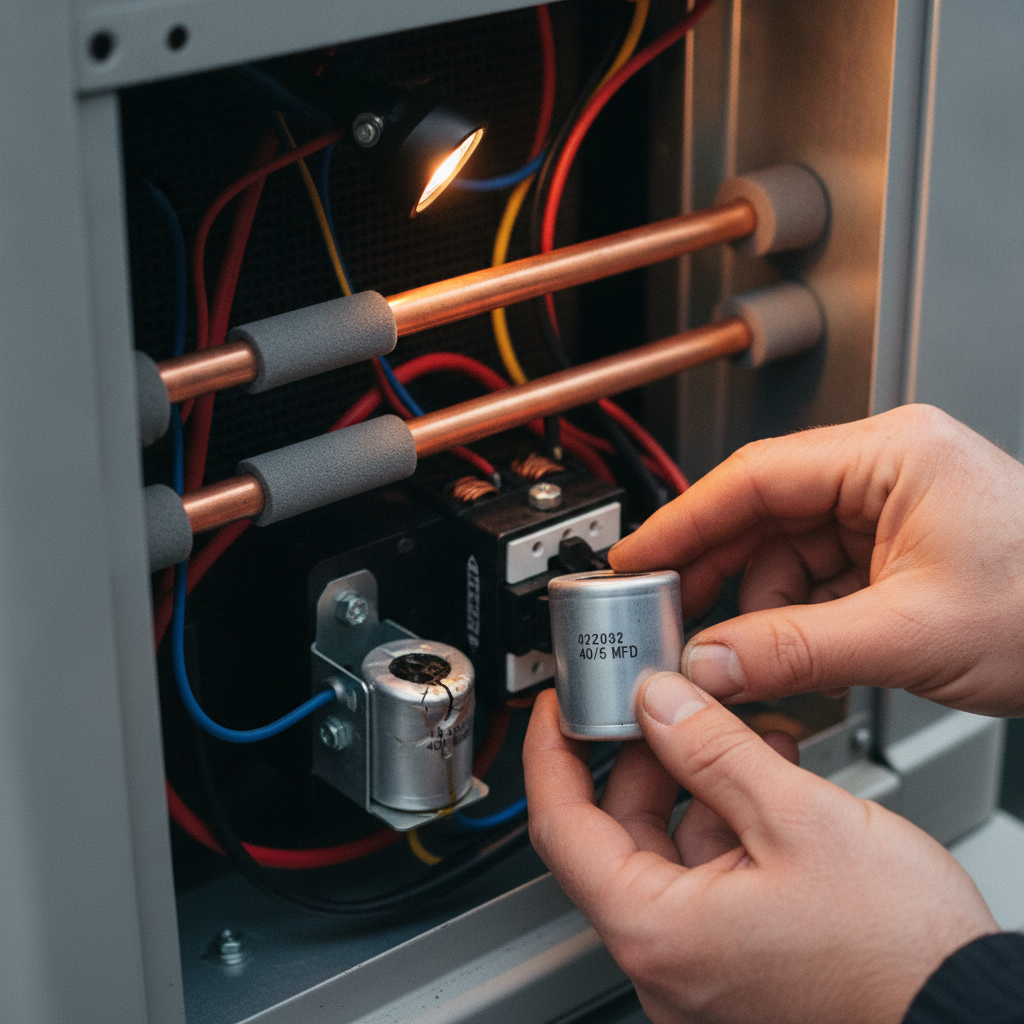
A blown run capacitor is the single most common reason a Carrier AC stops cooling. The compressor hums, the fan might still turn, but no cold air comes out. You tap the side of the unit and hear a click, then silence. That’s the capacitor giving out.
Contactors are the second usual suspect. They’re the little relay that sends 208 or 240 volts to the compressor. When the face of the contactor pits and welds shut, the compressor either won’t start or won’t stop. You’ll notice the unit running flat-out with no cycling, or not running at all.
On newer Carrier units (the inverter-driven compressors, post-2018 models), the inverter board is the third failure point. This is the circuit board that controls compressor speed. When it dies, the unit either won’t start or runs at one fixed speed with no modulation. Most expensive of the three, by a lot.
- Run capacitor: $15 to $40 part, $100 to $180 installed
- Contactor: $20 to $55 part, $120 to $200 installed
- Inverter board: $300 to $600 part, $450 to $800 installed (parts and labor, East Bay pricing)
Those are the numbers you should pay. If a quote for a capacitor swap comes in over $250, walk away and call someone else.
What should a Carrier AC repair cost in the East Bay?
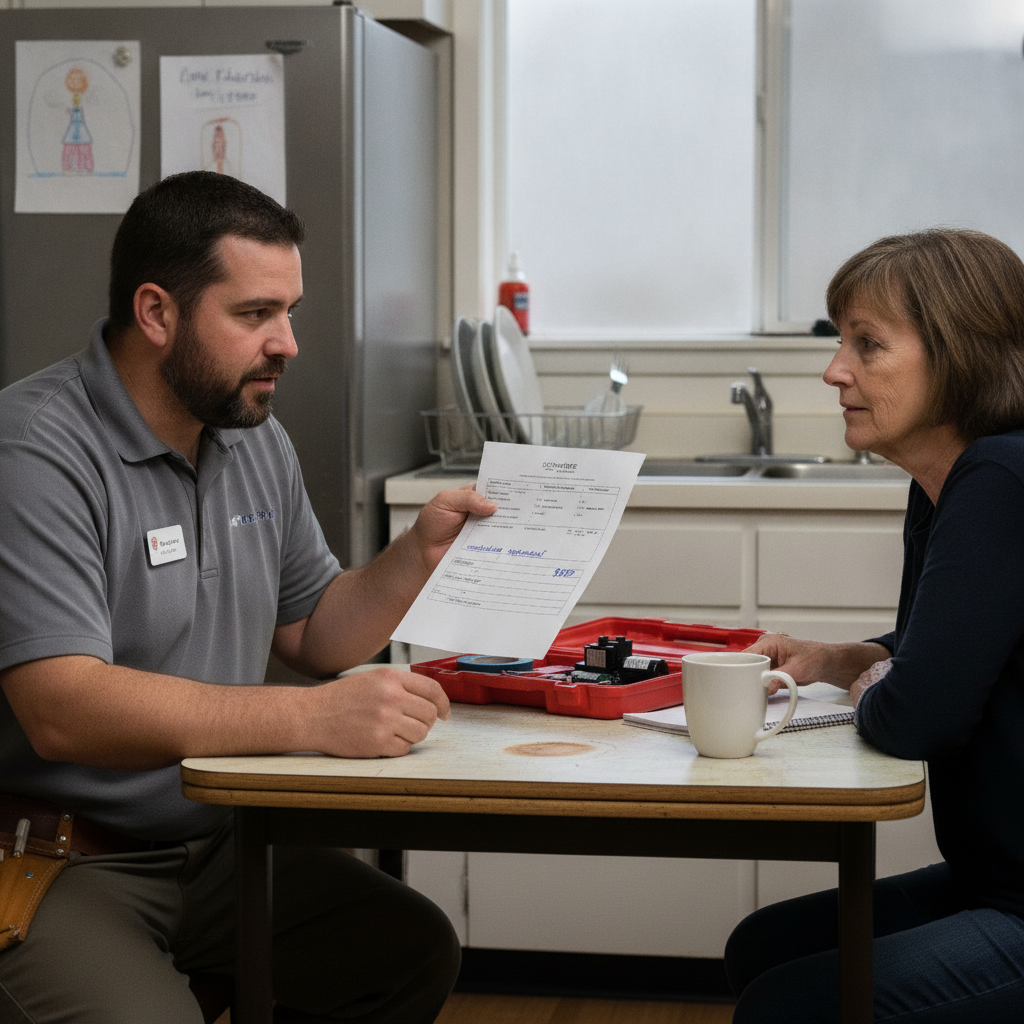
A fair diagnostic call in the East Bay runs $89 to $149, and that should be credited toward the repair if you proceed. A capacitor or contactor swap, done right, should land between $150 and $250 all-in. An inverter board job on a newer Carrier inverter unit is the outlier: $500 to $800 is reasonable, and anything over $1,000 for that one board means you’re paying for the logo on the van, not the work.
Carrier has been building residential units for more than a century. The parts ecosystem is mature and well-stocked. There’s no reason a run capacitor costs more than it does. If a tech tells you the part is “backordered” and quotes you $400 for a $30 component, that’s not a supply chain issue. That’s a margin play.
A contactor replacement on a Carrier unit in the East Bay runs $120 to $200 parts and labor. Hold a tech to that number.
Red flags on an invoice that mean you’re being gouged:
- A “trip fee” listed separately from the diagnostic (they should be the same line)
- A part marked up 3x or 4x the hardware-store price with no explanation
- A “system performance test” charged as a separate line item on a simple part swap
Skip the 800-Number: Why Local Certified Matters
Carrier completed the sale of its NORESCO service division to OPTERRA Energy Services in August 2026. That’s the company that used to field the “call Carrier” residential service number in a lot of markets. If you’ve been dialing that 800 number for a decade, the person answering it now works for a different company than the one that built your unit.
A Carrier Excellence dealer is a contractor who passed Carrier’s factory certification, stays current on their training, and stocks genuine Carrier parts. Spot Free HVAC holds that designation. What it actually means for you: the tech who shows up in your Hayward or Castro Valley driveway has been through Carrier’s specific training on your model, not a generic “HVAC 101” webinar. They carry the right capacitors and contactors for the 24ACX, the 38M, the 50T. They know which inverter boards Carrier swapped out in the 2022 field bulletin and which ones are still running fine.
A big-name call center dispatches whoever’s closest to your zip code. A local certified dealer dispatches the person who’s done your exact model three times this season.
First 24 Hours: What to Actually Do
If your carrier ac not cooling situation just started, don’t panic-call at 2 p.m. on a Tuesday. Do this first:
- Check the disconnect switch at the outdoor unit. Flip it off, wait 30 seconds, flip it back. If the unit was locked up on a tripped breaker, you’re done.
- Pull the air filter. A packed filter on a Carrier 2-ton will trip the pressure switch and shut the compressor down. If the filter’s black with dust, that’s your problem, not the capacitor.
- Hose out the condenser coils (unit powered off). East Bay oak leaves and acacia seed pods clog those coils by July. A quick rinse fixes more “not cooling” calls than any part swap.
- If the unit hums but the compressor never kicks in, that’s your capacitor. You can buy one at the hardware store for $25, but you have to match the microfarad rating on the old one. Don’t guess. Call a tech.
If none of that works and the unit’s been dead more than 24 hours, call a local Carrier-certified shop before the weekend heat spike. You’ll get a diagnostic the same day in most of the East Bay, and the repair the next.
The unit’s not dead. It’s one small part. Get the right person to look at it, pay a fair number, and you’re cooling by Thursday.
Learn more about how Spot Free HVAC can help you.


